Engineering leadership
built around ownership.
I'm Gaurav Talesara, Head of Engineering. I work across engineering leadership, product engineering, software architecture, and AI systems — with a business-first lens on every decision.
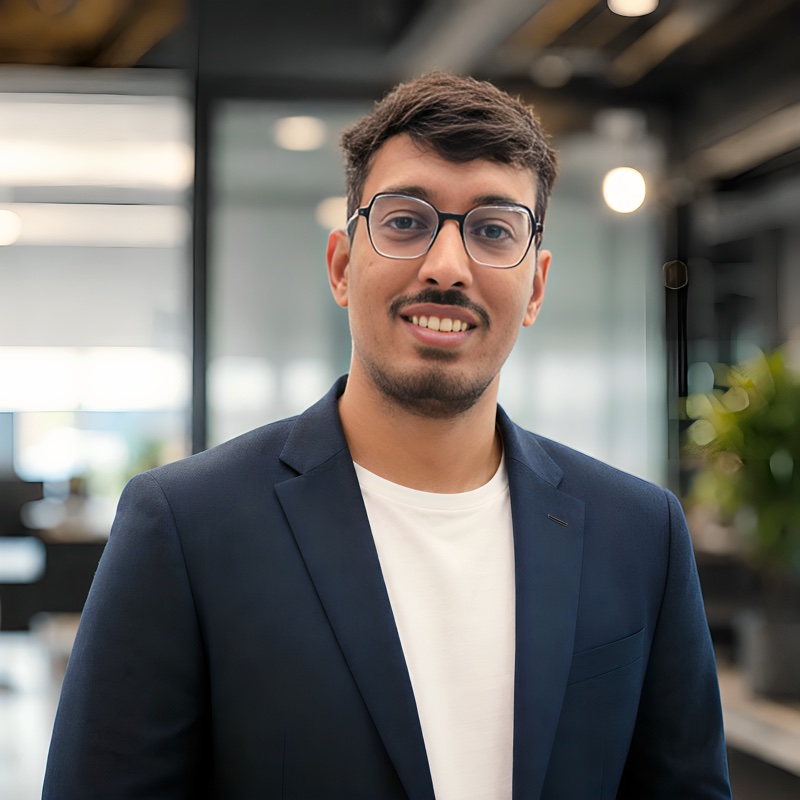
Head of Engineering
Teams, products, and systems that scale.
I've seen products break under growth because architecture decisions were made for speed, not scale. My work focuses on preventing that — and on building the team and ownership structure that makes it unnecessary to keep making that trade-off.
That means designing for production from the start: clear boundaries, cost-aware infrastructure, and systems that can handle real traffic and real data. I've worked across full-stack delivery, backend architecture, and AI systems — from early MVPs to production platforms — and the same pattern shows up: technical debt and scaling failures are usually traceable to early shortcuts.
Increasingly, that work happens upstream of code: joining product discovery, contributing to product strategy, and connecting engineering decisions to business outcomes before architecture is set.
I've always been curious about how things work. That curiosity started with understanding businesses and systems, and eventually led me to software. Today, I don't simply build software. I build systems.
What I Care About
- Taking ownership of mission-critical products, not just tickets
- Reducing founder dependency by building teams that can decide without me
- Mentoring engineers and developing Team Leads
- Participating in product discovery and contributing to product strategy
- Connecting engineering decisions to business outcomes
What I believe in
Ownership, Not Tickets
I took responsibility for one of the company's oldest products within my first month. Ownership over architecture, production reliability, and outcomes sits with engineering leadership.
Business Before Architecture
Technology should solve a real business or operational problem first. I prioritise understanding the problem over technical cleverness.
Teams That Don't Need Me
The goal isn't to become the bottleneck. I've mentored engineers and developed Team Leads so the organization can make good decisions without me in the room.
Judgment Over Hype
New tools and AI capabilities only help when they fit the system. I focus on patterns and tradeoffs that survive beyond the next release.
Why this experience matters
Working across full-stack delivery, architecture, and leadership gives a clear view of where systems and teams break. I use that to spot risk early, design for production from day one, and build the ownership structure around a system so it doesn't depend on any one person to keep working.
The goal isn't MVP-only engineering — it's systems, and teams, that can grow with the business without collapsing under load, cost, or founder dependency.
Engineering leadership experience
The titles changed less than the scope did — implementation, then product, then team, then system and business. See this progression visualized on the homepage.
Head of Engineering · Ciphernutz IT Services
Own architecture strategy across AI-driven systems. Responsible for scalability decisions, technical direction, and production reliability. Align engineering with product and business outcomes.
Project Lead Developer · Ciphernutz IT Services
Led architecture and delivery for multiple client systems. Drove scale and quality tradeoffs for SaaS and AI products. Owned technical risk and team execution.
Full Stack Engineer → Lead · Ciphernutz IT Services
Built and evolved client-facing systems end-to-end. Shipped scalable APIs and UIs; contributed to architecture decisions that supported growth and promotion.
Full Stack Engineer · 360 Core Inc.
Designed and delivered Web3 applications with secure, scalable backends. Owned API and integration architecture for production systems.
Software Engineer · Softncesis Private Limited
Full-stack delivery across web applications. Focus on maintainable backends, APIs, and cross-team practices that support long-term stability.
Engineering foundations
Formal training in Computer Engineering — fundamentals in software development, system design, and problem-solving.